This page contains Amazon affiliate links. As an Amazon Associate, we earn from qualifying purchases – the price doesn't change for you. Learn more
“Is a cheaper camera enough, or do I need the more expensive model?” This is a question almost everyone asks before buying a security camera. The answer depends on your individual needs.
Cloud Subscription or Local Storage: The Most Important Purchase Decision
Many cameras offer an app with push notifications, often without mentioning that recordings are frequently only accessible retroactively with an active cloud subscription. Without a subscription, you’ll still receive motion alerts, but you’ll lose access to events before the alarm.
Models with a microSD card slot, like the TP-Link Tapo C210, offer an alternative: recordings are stored locally on the memory card, allowing you to enjoy basic functionality without a subscription. However, keep in mind that if the camera is stolen, the memory card can be lost as well. If you want to rule this out, you need a cloud subscription.
Indoor Camera or Outdoor Model: Not Easily Interchangeable
An indoor camera mounted on your front door is not designed for weather conditions. Conversely, a weatherproof outdoor model is often unnecessarily large and expensive for use in a living room. If you only want to monitor a front door, a child’s room, or a hallway, you don’t need an IP65 housing, but a good indoor camera with sharp night vision.
Night Vision: The Range Specification Doesn’t Tell the Whole Story
Most cameras specify a night vision range in meters, but what’s crucial is whether details like faces are still recognizable at the end of the image, or just outlines. With cheaper models, detail recognition is often limited. Therefore, pay attention to reviews with sample images to assess the actual performance. The TP-Link Tapo C210 specifies a night vision range of up to 9 meters.
Motion Detection: Zones Prevent Most False Alarms
A camera that triggers an alarm every time a car or pedestrian passes by will quickly be ignored. Models with adjustable detection zones allow you to restrict monitoring to specific areas, such as your own entrance area.
Legally: Only Film Your Own Property
Security cameras are only allowed to capture your own property area. Sidewalks, the street, or the neighbor’s property should be technically obscured or avoided by the camera’s orientation.
Our Assessment
For indoor use – front door, living room, child’s room – a good indoor camera with zone detection and local storage option is often the right choice. If you want to monitor the driveway or garden, you need a weatherproof outdoor model.
Products mentioned in this post
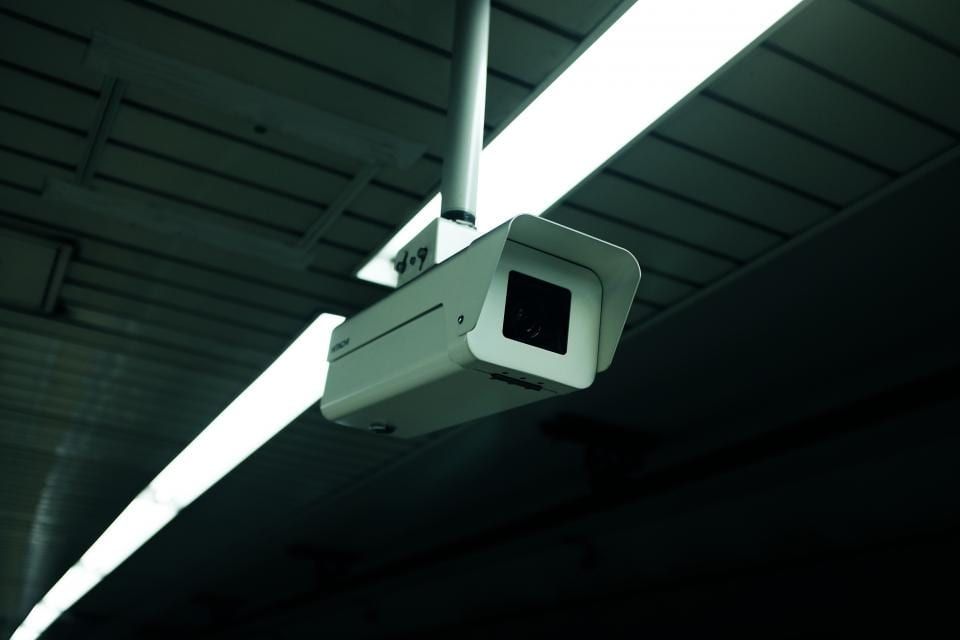
TP-Link Tapo C210
Swivel 3MP Indoor Camera with Night Vision and SD Card instead of Mandatory Subscription.
You might also like
All posts in this category
Smart Plugs: Measure Power Consumption and Identify Savings Potential
Smart plugs enable the measurement of power consumption for connected devices, helping you identify unnecessary energy waste. We’ll show you what to look for when using them and how to uncover savings potential.
Learn more
Securing Your Warehouse Without an Alarm System: A Smart Solution for Small Businesses
How you can keep a small warehouse in view affordably with a Wi-Fi camera and smart plugs – and where the limits of this solution lie.
Learn more